Solar Panel Installation Cost (2026): Real Numbers, Payback, and Rebates
A residential solar installation costs $15,000–$30,000 before incentives. See 2026 per-watt pricing, the payback maths and how to compare installer quotes.
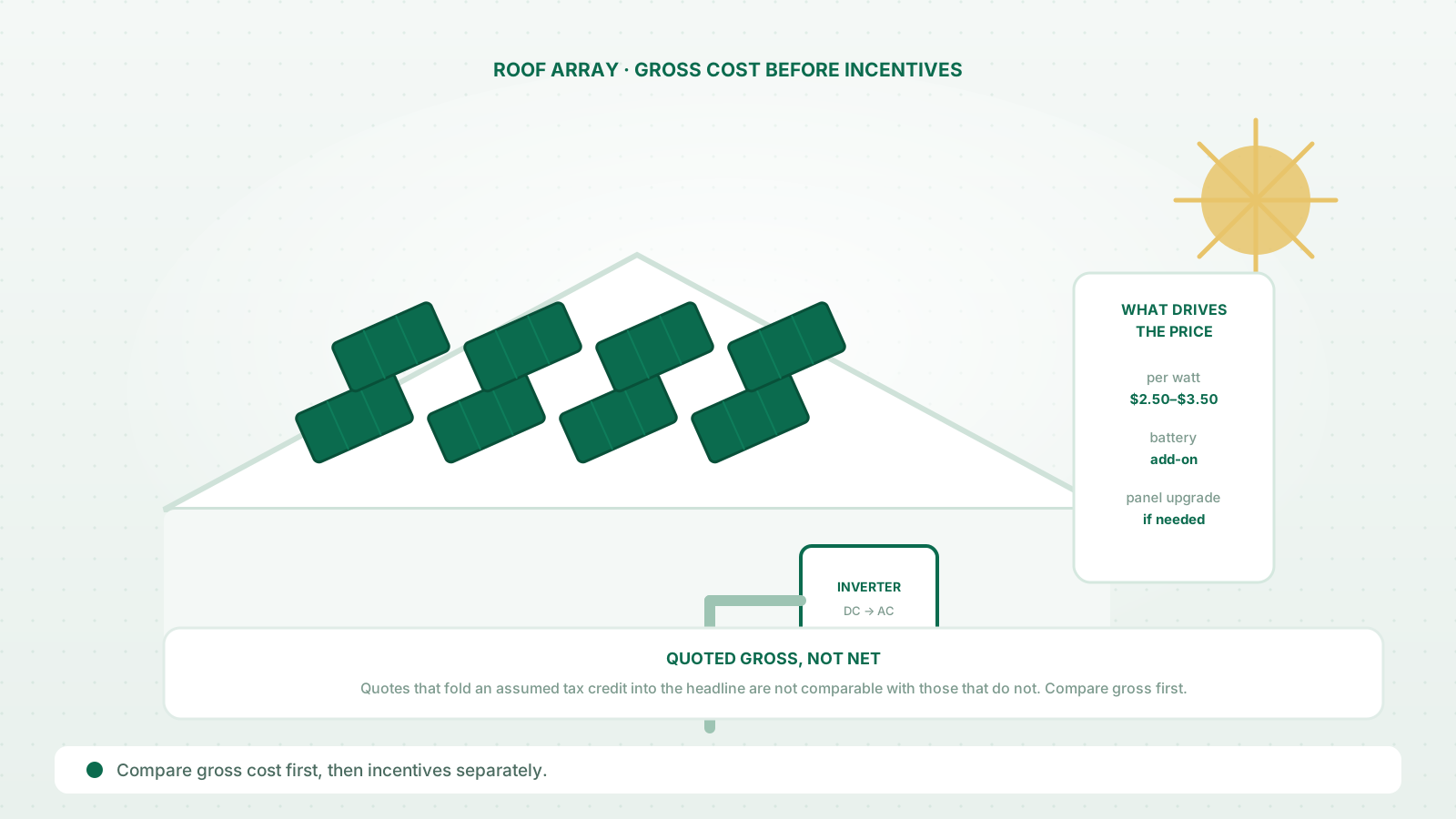
Which option fits your situation?
| If this describes you | Choose | Typical cost | Why |
|---|---|---|---|
| You want to cut the bill, not go off-grid | Solar only | $2.50–$3.50 per watt | Storage is not required for a grid-tied saving. Most people start here. |
| You want backup during outages | Add battery storage | add $8,000–$18,000 | A significant addition. If outages are rare, a generator may be the cheaper answer. |
| Your roof will be replaced within ten years | Budget for removal and reinstall | add $2,000–$6,000 | Commonly forgotten at the planning stage and expensive to discover later. |
| Your electrical panel is old or full | Budget for a panel upgrade | add $1,500–$4,000 | Some homes need it before solar can connect. Not in the headline per-watt figure. |
| You are comparing quotes | Compare gross cost, then incentives | $0 | Quotes that fold an assumed credit into the headline are not comparable with those that do not. |
Typical cost ranges
| Item | Low | High | Notes |
|---|---|---|---|
| Small system (4–5 kW) | $9,000 | $15,000 | Before incentives. Typical small/ efficient home. |
| Average system (6–8 kW) | $15,000 | $25,000 | Before incentives. Most U.S. homes fall here. |
| Large system (10 kW+) | $25,000 | $40,000 | Big homes, high usage, EV charging. |
| Per-watt installed cost | $2.50 | $4.00 | National range after years of declines. |
Ranges are typical U.S. market estimates for 2026 and vary by region, home, and contractor. Always confirm a written quote before work begins.
What the quote often misses
These are the items that most often sit outside the headline price. They are not always needed, but when they are required they are what turns a mid-range quote into a top-of-range one.
| Item | Low | High | Why it is often missed |
|---|---|---|---|
| Battery storage (add-on) | $8,000 | $18,000 | Not part of a solar-only quote. If backup power matters, it changes the budget substantially. |
| Panel/roof removal & reinstall | $2,000 | $6,000 | Only needed if the roof is replaced during the system’s life. Commonly forgotten at the planning stage. |
| Electrical panel upgrade | $1,500 | $4,000 | Some homes need one before solar can be connected. Not visible in the headline per-watt figure. |
A typical U.S. home pays $15,000–$25,000 for solar before incentives, for a 6–8 kW system. After the federal tax credit and any state or utility rebates, the net cost is commonly $10,000–$18,000. The installed cost per watt has fallen for years and now runs roughly $2.50–$4.00.
The headline number matters less than the payback: how many years of avoided electricity bills it takes to recover the cost.
What drives the price
1. System size (kW). Bigger systems cost more but also produce more. Size should follow your actual usage, not a salesperson’s estimate.
2. Roof complexity. A simple, unshaded, south-facing roof is cheapest to work on. Multiple roof planes, steep pitch, tile, or obstructions add labor and hardware.
3. Local labor rates. Installation is labor-heavy. The same system costs meaningfully more in a high-cost metro.
4. Equipment tier. Panels and inverters vary in efficiency and warranty length. Higher-efficiency panels cost more and can matter on a small roof where space is tight.
5. Electrical work. Many older homes need a panel upgrade to handle the solar feed, adding $1,500–$4,000.
6. Add-ons. Battery storage ($8,000–$18,000), monitoring, and critter guards all add up.
Payback: how to actually think about it
Payback is simple arithmetic:
Payback (years) ≈ Net system cost ÷ Annual electricity savings
If a system costs $14,000 net and saves $1,400 per year, payback is about 10 years. Panels typically carry a 25-year production warranty, so a 10-year payback means roughly 15 years of effectively free power after that.
What changes the math:
- High electricity rates shorten payback — every kWh avoided is worth more.
- Good sun and a clean, south-facing roof increase production.
- Incentives cut the net cost directly.
- Shade is the biggest killer — one shaded panel can drag down a whole string.
Ask any installer to show the production estimate and the assumptions behind the savings, not just the system price. A quote with no production estimate is not a real quote.
Rebates and incentives
There are three layers worth checking:
- Federal tax credit — a percentage of qualifying costs claimed against federal tax you owe. Rates and rules change, so confirm the current terms and consult a tax professional.
- State incentives — some states offer credits, rebates, or property-tax exemptions.
- Utility programs — net metering rules and local rebates vary enormously by utility and can change annually.
Do not accept a sales estimate of incentives without verifying each one. Incentive rules change, and a good installer will itemize which ones apply to you.
Solar vs. battery vs. generator
These solve different problems, and people often bundle them by mistake.
| Need | Right tool |
|---|---|
| Lower electricity bills | Solar |
| Backup during outages | Battery or generator |
| Both bills and backup | Solar + battery |
| Backup only, budget-minded | Portable generator |
Solar alone usually does not keep your lights on during an outage unless you add a battery or a special inverter. If backup power is the goal, plan for storage separately.
Questions to ask before you sign
- What is the estimated annual production, and what assumptions back it?
- Is the roof assessment documented, including shading?
- Which incentives are included, and are they guaranteed or estimated?
- Who handles the permit and utility interconnection?
- What is the warranty on panels, inverter, and workmanship?
- What happens if I sell the house — is the system owned or leased?
- Is this a loan, lease, or purchase? These have very different long-term costs.
That last question matters most. A lease or power purchase agreement can look cheap monthly but usually costs far more over 20 years and complicates selling the home. An outright purchase (cash or loan) typically gives the best long-term return.
Maintenance and lifespan
Solar is close to maintenance-free. Panels generally need only occasional cleaning in dusty areas, and the inverter — the one component with moving parts — typically needs replacement once during a 25-year span.
Watch for:
- Shade growth. Trees grow; production drops. Trim before it costs you.
- Roof age. Install solar on a roof that has at least a decade of life left, or plan for the removal-and-reinstall cost later.
- Soiling. In dusty or high-pollen regions, a seasonal rinse keeps production up.
Bottom line
Solar’s value is in payback, not sticker price. Compare quotes on production estimate, net cost after verified incentives, and warranty, not on the lowest number. And be clear about whether you want lower bills or backup power — those are two different purchases.
The process, start to finish
Knowing the timeline prevents surprises. A solar install is mostly paperwork, not construction.
1. Site assessment (1–2 weeks). A designer reviews your roof, shading, and past electricity usage, then proposes a system size and layout.
2. Design and proposal. You receive a production estimate and a price. This is where you should scrutinize the assumptions.
3. Financing decision. Cash, loan, lease, or power purchase agreement. This choice affects your total cost more than the equipment.
4. Permitting (2–8 weeks). The installer files for a building or electrical permit with your city or county.
5. Installation (1–3 days). Crews mount the racking and panels, run conduit, and install the inverter.
6. Inspection and interconnection (2–8 weeks). The utility and local inspector sign off, then the utility installs a bi-directional meter and grants permission to operate.
From signing to switch-on, expect one to three months. Anyone promising a week is not describing reality.
Common sales tactics to watch for
Solar has a reputation for aggressive sales for a reason. Watch for these:
- “Your electric bill will disappear.” It usually will not — you still pay for grid connection and any power you use at night.
- Unverified incentive claims. Ask the installer to itemize each incentive and show where it applies to you.
- Pressure to sign the same day for a “discount.” Legitimate quotes do not expire in hours.
- Lease or PPA presented as ownership. Read whether you own the system or are renting it.
- Production estimates with no shading analysis. An estimate without a shade study is a guess.
- A lien or UCC filing you were not told about. Ask explicitly whether the financing places a lien on your home.
A good installer answers all of these without hesitation and puts the numbers in writing.
Owning vs. leasing vs. a loan
| Option | Upfront | Long-term cost | Selling the home |
|---|---|---|---|
| Cash purchase | High | Lowest | Simple — you own an asset |
| Solar loan | Low | Moderate | Usually fine; pay off at sale |
| Lease / PPA | None | Highest | Often complicated; buyer must qualify |
The monthly payment on a lease looks attractive, but over 20 years it typically costs substantially more than a purchase, and it can make selling the home harder because the buyer must assume or qualify for the agreement. If you can afford a loan or cash, ownership almost always wins.
How to vet an installer
Solar companies come and go, so the installer matters as much as the equipment. Each check below exists because of a specific way these deals go wrong.
| Check | Ask for | Why it matters |
|---|---|---|
| Licensing | Electrical licence number, verified with your state or local authority | Solar work usually requires a licensed electrician. An unlicensed install can fail inspection and void the interconnection |
| References from older installs | Addresses of installs at least a year old | A new install always works. Year-old installs are where workmanship problems show |
| Workmanship warranty | Written confirmation it covers labour, not just panels | Equipment warranties are standard; labour cover is what protects you from a bad roof penetration |
| Who actually does the work | The crew’s employer — the company you hire, or a subcontractor? | Subcontracted crews are the reason workmanship warranties are hard to enforce |
| Permits and interconnection | Confirmation they handle both | Left to you, these are weeks of paperwork and a common source of stalled projects |
| A physical local address | A verifiable local office | A call centre cannot be held accountable, and it may not exist next year |
The single strongest signal: an installer who has been local for years and can show you a roof they did three years ago. Ask for that specifically — anyone can show you last month’s work.
What can go wrong
- Roof leaks from poorly sealed mounts — another reason to insist on workmanship warranty.
- Underproduction from unexpected shade or a design that was optimistic.
- Inverter failure — the most common component to fail; check its warranty separately.
- Utility rule changes — net metering policies shift, which can change your payback after you have installed.
- Panel removal costs if the roof needs replacement later.
Planning for these upfront — roof condition, real shade, inverter warranty — avoids most of the pain.
FAQ
Will solar cover my whole bill? Often a large share, but rarely 100%. You still pay for grid connection and for power used when the sun is not shining, unless you add a battery.
What if my roof needs replacing soon? Replace the roof first, or plan for the cost of removing and reinstalling the panels later ($2,000–$6,000). Installing solar over an aging roof is a common and expensive mistake.
Does solar increase home value? Studies generally show solar homes sell for a premium, but the amount varies by market, and a leased system can complicate the sale. Owned systems tend to fare best.
Can I add panels later? Usually yes, if the inverter and roof allow it. Sizing the inverter slightly larger than today’s panels keeps that option open.
How long do panels last? Most carry a 25-year production warranty, and they typically keep producing at reduced output well beyond that.
Recommended equipment
How we arrived at these figures
Figures reflect published panel and inverter prices, installer quotes and typical permitting costs from multiple U.S. markets, quoted before any tax credit.
Quoted gross, not net. The federal credit and any state incentive change the final figure materially, so the page shows the gross cost and treats incentives separately rather than baking an assumption into the headline number.
- These are ranges, not quotes. Real prices vary by region, season, property condition and access. Always get a written quote before committing to work.
- We are independent.
Some links on this page are affiliate links, marked
rel="sponsored". They do not change what we recommend, and we recommend against buying in some situations. - Where we are unsure, we say so. If a figure rests on a small sample or a single source, we say that rather than rounding it into false precision.
Frequently asked questions
How much does it cost to install solar panels on a house?
A typical U.S. residential solar installation costs $15,000–$25,000 before incentives, for a 6–8 kW system. After the federal tax credit and any state or utility rebates, the net cost is commonly $10,000–$18,000. Cost scales with system size, roof complexity, and local labor rates.
How long does it take for solar panels to pay for themselves?
Payback typically runs 7–12 years depending on your electricity rate, how much sun you get, system cost, and available incentives. High electricity prices and good sun shorten payback; cheap power and heavy shade lengthen it. Panels usually carry a 25-year production warranty, so most systems pay back well within their life.
What is the federal solar tax credit?
The residential clean energy credit lets you claim a percentage of your qualifying solar costs against federal tax you owe. The percentage and rules have changed over time, so confirm the current rate and eligibility before you buy, and talk to a tax professional about your situation.
Is solar worth it if I don't get much sun?
Less sun means lower production and longer payback, so solar is less attractive in heavily shaded or cloudy locations. A site assessment with shading analysis will tell you whether production makes sense for your specific roof before you commit.
Do I need a battery with solar?
No. A battery adds backup power during outages and lets you use stored power when rates are high, but it is a significant extra cost. Many homeowners start solar-only and add storage later. If outages are a concern, a battery or a generator is worth considering separately.
How long does installation take?
The physical install is usually one to three days, but the full process — site assessment, design, permitting, utility approval, and inspection — often takes one to three months from signing to switch-on.